- Home/
- Buy Clomid at Low Price in the United States Online
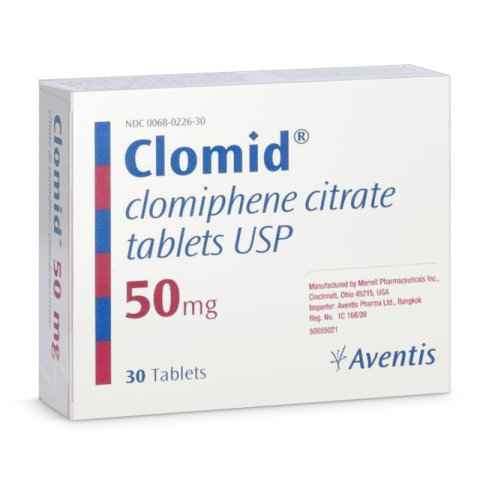
| Name of medication | Clomid |
|---|---|
| Main substance | Clomiphene citrate |
| Intended use | Female Infertility (induction of ovulation) |
| Strength variants | 50 mg, 100 mg tablets |
| Activation time | Typically within 5-10 days after first dose |
| How long it acts | Single cycle; effect assessed within one menstrual period |
| Standard intake schedule | Once daily, usually for 5 days per cycle |
| Prescription requirement | Prescription only in United States |
| Average retail price (US) | $10–$40 per cycle (varies by pharmacy and brand) |
Clomid in Female Infertility: Guidance for United States
Clomid is a prescription medication containing clomiphene citrate, widely used to treat certain forms of female infertility by stimulating ovulation. In the United States, it is a legally regulated therapy, available through licensed healthcare providers and pharmacies. Understanding how Clomid works, who benefits from it, and how to use it safely can help you decide if it is the right option for your fertility journey.
Infertility Is Common and Treatable: You Are Not Alone
Female infertility can feel isolating, but you are far from alone. According to the Centers for Disease Control and Prevention (CDC), 19% of married women aged 15-49 in the United States are unable to get pregnant after one year of trying (CDC, 2022). The World Health Organization (WHO, 2023) adds that approximately 1 in 6 people globally will experience infertility at some point in their lives. Importantly, many causes of infertility are treatable—up to 80% of women with ovulation problems can conceive with appropriate therapy, especially when evidence-based medications are used under clinical supervision. Recognizing that infertility is both common and solvable is the first step toward effective treatment.
How Clomid Works: From Hormones to Hope
Clomid acts at the hormonal level to stimulate your ovaries to release an egg, which is essential for conception. The active compound, clomiphene, works by binding to estrogen receptors in the brain—specifically in the hypothalamus. This action “tricks” your body into sensing lower estrogen levels than actually exist. As a result, your pituitary gland increases the production of two critical hormones: follicle-stimulating hormone (FSH) and luteinizing hormone (LH).
- FSH (Follicle-Stimulating Hormone): Promotes the growth of ovarian follicles (the tiny sacs that contain eggs).
- LH (Luteinizing Hormone): Triggers the final maturation and release (ovulation) of an egg.
For most women who do not ovulate regularly, Clomid can restore this natural process. Typically, an egg is released 5–10 days after completing a Clomid course. The practical result: a predictable ovulation window, making it possible to time intercourse or assisted reproductive techniques for the highest chance of pregnancy.
It is important to note that Clomid will not work if infertility is due to blocked fallopian tubes, severe male factor infertility, or low ovarian reserve. In these cases, a different approach is needed.
Is Clomid the Right Choice for You?
| Your Situation | Should You Use Clomid? | Reason |
|---|---|---|
| No ovulation (anovulation) but regular uterus and open fallopian tubes; partner’s sperm is normal | Yes | Clomid is effective at inducing ovulation in women with these characteristics |
| Have polycystic ovary syndrome (PCOS) with infrequent periods | Often | PCOS is a leading cause of anovulation; Clomid is first-line, but sometimes may require higher doses or combination with other treatments |
| Irregular cycles but already tried Clomid for 3–6 cycles without pregnancy | Consider alternatives | If Clomid has not resulted in ovulation or pregnancy after several cycles, further evaluation or other medications like letrozole, gonadotropins, or assisted reproduction may be more effective |
| History of blocked tubes, severe endometriosis, or low ovarian reserve | No | Clomid does not address these causes of infertility; different interventions are required |
| Desire for twins/multiples | Not recommended | While Clomid increases the chance of twins (about 8%), using it solely for this purpose is not medically advised due to risks of multiple pregnancy |
Before starting Clomid, a complete fertility evaluation is essential, including hormone tests, pelvic imaging, and a semen analysis for your partner. doctor—a board-certified reproductive endocrinologist in the United States—recommends that every woman considering Clomid be evaluated for treatable causes and monitored during therapy for optimal safety and success.
How to Use Clomid in Real Life: What to Expect and What to Do
Clomid treatment is typically started on day 3, 4, or 5 of your menstrual cycle, taken once daily for five days. Your doctor will determine the starting dose—usually 50 mg, but it may be adjusted based on your unique response. Here’s what you can expect and how to handle common scenarios:
- Monitoring: Ultrasound and/or blood tests may be used to track follicle growth. This helps time ovulation and avoid complications like ovarian hyperstimulation.
- Timing intercourse: Ovulation typically occurs 5–10 days after the last pill. Your provider may recommend ovulation predictor kits and timed intercourse or intrauterine insemination (IUI).
- If you miss a dose: Take it as soon as you remember within the same day. If a whole day passes, skip the missed dose and inform your doctor. Do not double up next day.
- If ovulation does not occur: Your doctor may increase the dose gradually (up to a maximum of 150 mg per day), or switch to a different medication after several unsuccessful cycles.
- What’s normal: Some women notice mild hot flashes, mood swings, or bloating—these usually resolve on their own.
- When to call your doctor: If you experience vision changes, severe pelvic pain, rapid weight gain, or trouble breathing, contact your healthcare provider immediately.
Note: More than six cycles of Clomid are generally not recommended due to declining success rates and increased risks. If you have not conceived after this period, further evaluation and alternative therapies are indicated.
When Clomid Is Not Suitable: Contraindications Explained
Certain medical conditions mean Clomid should not be used, as the risks outweigh potential benefits. Each contraindication is linked to the underlying risk:
- Liver disease: Because clomiphene is metabolized in the liver, impaired liver function can lead to accumulation and toxicity.
- Unexplained uterine bleeding: May signal an undiagnosed malignancy; using Clomid without a clear diagnosis could delay appropriate treatment.
- Ovarian cysts unrelated to PCOS: Clomid can worsen cysts that are not part of polycystic ovary syndrome.
- Pregnancy: Not to be used if already pregnant, as it offers no benefit and could pose risks.
- Known hormone-sensitive tumors: Such as certain breast or uterine cancers, because Clomid acts on the estrogen pathway.
If you have any of these conditions, your doctor will advise against Clomid and recommend safer alternatives. Always review your history and medications with your fertility specialist.
Possible Side Effects: What to Expect and When to Seek Help
As with any medication, Clomid can cause side effects. Most are mild and tend to resolve after stopping the medication, but it’s important to know what is typical and what is not:
- Very common (10%–25%): Hot flashes, abdominal discomfort, breast tenderness, nausea, headache, mild mood swings.
- Occasional (1%–10%): Blurred vision or visual disturbances (temporary), bloating, dizziness.
- Rare but serious: Ovarian hyperstimulation syndrome (OHSS) — rapid weight gain, severe pelvic pain, swelling, shortness of breath; severe allergic reaction (swelling of face/tongue, difficulty breathing); severe visual changes.
Most mild reactions fade soon after you stop Clomid. If you experience severe pain, trouble breathing, or visual symptoms persisting more than a day, seek medical help right away. In case of severe allergic reaction or sudden swelling, call 911 or the American Association of Poison Control Centers at 1-800-222-1222 for urgent guidance.
Medication Interactions: What Not to Mix with Clomid
Clomid has few documented drug interactions, but some combinations may affect its efficacy or safety:
- Other fertility drugs (e.g., gonadotropins): When combined, close medical monitoring is required to minimize the risk of multiple pregnancies and OHSS.
- Certain herbal supplements and over-the-counter medications: Some, such as phytoestrogens or high-dose soy isoflavones, can interfere with Clomid’s action. Always inform your doctor of all supplements you use.
- Hormone replacement therapies: Estrogen therapies may counteract Clomid’s mechanism, reducing its effectiveness.
It is essential to share your full medication and supplement list with your provider before starting Clomid, as interactions can be subtle but significant for treatment success and safety.
Clomid and the Alternatives: Comparison Table
| Medication/Approach | Main Use | Typical Success Rate | Key Limitations |
|---|---|---|---|
| Clomid (Clomiphene) | First-line for ovulation induction in anovulatory infertility | ~60–80% ovulation; ~10–20% pregnancy per cycle1 | Less effective in women with low ovarian reserve; not for tubal/male factor infertility; may thin uterine lining in some |
| Letrozole | Alternative ovulation induction, especially in PCOS | Similar or slightly higher pregnancy rates in some studies | Not FDA-approved for infertility, but widely used; less data on long-term safety in this context |
| Gonadotropin injections | Second-line or for assisted reproduction (IUI/IVF) | Up to 80–90% ovulation; higher multiple pregnancy risk | Expensive, requires close monitoring; more complex to use |
| IVF (In Vitro Fertilization) | For severe or unexplained infertility | Varies (30–50% per cycle, depends on age and clinic) | Costly, invasive, used after simpler options fail |
1In clinical trials referenced by the American Society for Reproductive Medicine (ASRM, 2021) and FDA prescribing information.
Clomid remains the best initial option for those with ovulatory dysfunction and otherwise normal fertility factors. However, alternatives may be preferable if Clomid is ineffective after several cycles, causes side effects, or if specific medical conditions apply. Honest assessment of your individual situation with your doctor is crucial for success.
What Will It Cost? Actual Expenses in the United States
| Expense Item | Estimated Cost (USD) | Notes |
|---|---|---|
| Initial consultation (reproductive specialist) | $150–$400 | In-person or telemedicine; may vary by region and insurance |
| Fertility testing (labs, ultrasound) | $200–$1,000 | Typically required before prescription; costs vary by coverage |
| Clomid (per cycle, 5 tablets) | $10–$40 | Generic versions are widely available |
| Prescription processing fee | $0–$25 | Some offices charge, some do not |
| Delivery (if ordering online) | $0–$15 | Standard shipping; expedited may cost more |
| Total | $360–$1,480 | Full cycle including initial workup; medication cost alone is much lower |
These figures reflect typical out-of-pocket costs for a single attempt at conception with Clomid in the United States. Insurance may reduce some expenses, especially for initial labs and office visits, but fertility medications are sometimes excluded. Online pharmacies may offer lower medication prices but require a valid prescription, per FDA and state regulations. Always ensure you are purchasing from a licensed U.S. pharmacy to avoid counterfeits.
What Else Should You Know Before Deciding?
Three important points remain:
- Duration of therapy: Most women conceive within three to six cycles of Clomid if it is going to be effective. Prolonged use does not increase chances and may raise risks.
- Legal and regulatory context: The U.S. Food and Drug Administration (FDA) regulates Clomid as a prescription-only medication. Obtaining it without a prescription is illegal and may expose you to counterfeit or unsafe drugs. State telemedicine laws permit remote prescribing, but a clinical evaluation is still required.
- Emotional impact: Fertility treatment can be stressful. It is normal to feel a range of emotions—hope, anxiety, frustration—during the process. Seek support from partners, counselors, or peer groups if needed; mental health is as important as physical health on this journey.
Most crucially, have an open conversation with your healthcare provider about all aspects—medical, logistical, and emotional—before starting Clomid. The pathway to pregnancy is unique for every woman, and careful planning improves both safety and success.